BFA ROUGH DRAFT

Link to video (not complete)
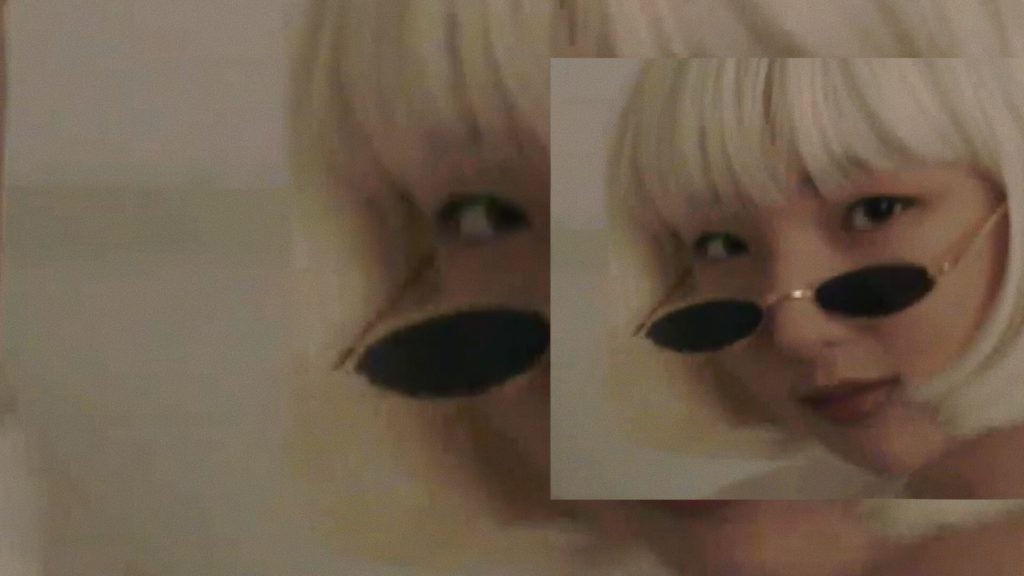
(I have a bunch of green screen footage that I shot at school before the campus closed, and I’m thinking of incorporating it into my video. It will have a contrast in quality as I mainly shot with an old VHS camcorder, and the green screen is done w a DSLR. I would like to hear your feedback!

SHALISSA by ME
a fashion film in a quarantined world

Artist Statement:
We all have an alter ego within us. It might have given you the courage to present first in class or dance in front of a total group of strangers. It can help show you things about yourself you never thought you could do and give you the extra confidence to just be you. Shalissa is my alter ego that has helped me bring out my confidence in myself. She is bold and doesn’t let the world stop her from doing her work. This piece shows how her passion for fashion can not be kept from the world. She will try every outlet and means to still be her, even in this quarantine.

personal link: choiclaudia.com

Project Update

My initial idea was to make a fashion video. Using my alter ego “Shalissa” I was planning on hitting campus to find individuals with a unique fashion sense, as well as making my own clothes and displaying that with VHS camcorder. My main idea was using Shalissa as the creator of my project.

Now, I am thinking of ways to shift my project and most of it will not be possible anymore. I think right now is a very special time in history, and I’m wondering how I can use this as a way to make something that is unique to right now. As in, when you see my video, you know it was during the pandemic of COVID19.

I was thinking about reaching out to people online to record themselves with their favorite look. Having various people in different settings may be interesting. Possibly even getting people from all over the world (some people I already know, or even strangers)

I think I will still be able to make my own clothes, hand sewing instead of using the machines at school. Hopefully this video will be a zeitgeist of what is going on right now. How people can still be artistic in the confinement of their own home. I still want to have music playing as well. I’m trying to research videos online to give me ideas…

Technology and Race Response

Algorithms of Oppression– Safiya Noble
In this talk, I found it very interesting when Noble talked about how Kabir Ali searched up “3 black teenagers” vs “3 white teenagers” on google. For the search results of the black teenagers, the images that came up were mugshots in comparison to when it was white teenagers, only getty stock photos came up (nothing to due with criminality.) This is a problem of google’s algorithms which they didn’t formally apologize for, they only tweaked the algorithms. I found a bunch of articles where they questioned if google was “racist.” I’m curious to know how these algorithms were first put in place. I don’t think google was intentionally trying to be “racist” but these algorithms stemmed from somewhere. This reminds me of when I was in high school, my senior year english class, we talked a lot about social media, politics, as well as social issues. We focused a lot on the BLM movement, and one thing we learned about was when a young black teen was shown on the news, they would pick images that portrayed them as “criminals” or “trouble makers” rather than choosing to show more wholesome photos such as their graduation or pictures with their families. I think these algorithms are a representation of society, and it influences the things we see. If algorithms are biased, how much more will that influence and affect the people that are exposed to these patterns on the internet and in real life.

What have you searched up on google that has very biased and non representational results? I searched up ‘3 asian teenagers” and the images do not reflect asian teenagers at all. How can we fix this algorithm?

Race After Technology– Ruha Benjamin
I thought the app “citizen” was a great app to be updated on the latest crimes in the area. And the users can also upload incidents onto the app. I think it is very unfortunate that we need to have apps like these to report on the “bbq beckys” or our neighborhoods. Another thing she mentioned was the new Jim Code which are: engineered inequality, default discrimination, coded exposure, techno benevolence. She brings up an abolition approach to the new jim code which is the “Digital Defense Playbook” which are dealing with pervasive data collection and data driven systems. Their aim is to develop power not paranoia according to our data bodies. I find it very interesting how communities are fighting injustice through technology. I feel like in some ways, it can be more effective.

What are some ways you see technology fighting racial injustice?

Laboring Infrastructures– Lisa Nakamura
I think the VR ‘Pathos’ is a very interesting concept. They create empathy based VR experiences to disrupt interpersonal oppression, discrimination, and misperceptions. What I liked is what the founder of Pathos Lab, Romain Vak, had said, “The best and worst thing is that nobody in the filed of VR has any clue what’s going on. What that means is that there are no rules yer but it also means that there a lot of eggs are in a basket that is difficult to predict. There is a lot of speculation and theorists, but I don’t really think anyone knows where the heck the industry is going.” I think it’s fair to say that no one in the tech industry can fully predict what will happen in the future. Although they can look at past data, there is no way to really see what direction technology will be going. FB can predict as far as their data has collected, but they don’t know where their future lies 10 years from now.

perhaps because VR is still very new, where do you think the tech industry in VR will be in 10 years?

Social Interaction, Social Photography, and Social Media Metrics Response

The Social Photo– Nathan Jurgenson
The first part of this reading talks about photography and how it has allowed us to document life in new ways and to share those snap shots of lived experiences with other people. Jurgenson says “it changed the possibilities of time and space, privacy and visibility, truth, and falsity” (5). How we see photography is constantly changing as society progresses and tries to keep up with the modifications in how we see ourselves and the world. I think photography 20 years ago and how we define visibility, privacy, memory, death, time, and space is very different than how we see it today. This has a lot to do with new technologies, social media, etc… Being called a photographer today and 20 years ago also holds a very different meaning…. Social photography are everyday images taken to be shared… Jurgenson treats social photography “less as an evolution in photography or as the advance of amateur snapshot photos, and more as a broader devlopment in self-expression, memory, and sociality” (11). He doesn’t want to define social photography as just photography done on a smart phone shared on social media but as a “cultural practice…a way of seeing, speaking, and learning.”

Interesting quotes:
“To understand our social world today means
understanding the ubiquity of digital communications and social media, and this media is deeply constituted by the images we make and share. Any contemporary social theory should be, in part, a theory of social media, which should be, in part, a theory of social photography” (11).

What did social photography look like before social media? Or does social photography exist because of social media?

What can’t we measure in a quantified world?– Jill Walker Rettberg
What I found most interesting (around 16:23) is when she mentioned Alice Marwick. Marwick argues that social media has metrics to bring it’s users up to be really good post industrial citizens (need to be self branding, entrepreneurial on a personal level.) The metrics on social media & even the fitbit shows how we are trying to improve ourselves. At first, I wasn’t sure why Rettberg brought up the fitbit. But just as we trust these metrics without question, we try to improve our daily lives but exercising and walking as much as we can. We are constantly tracking our steps and finding ways to improve. Social media metrics are similar in the way that we use likes, shares, followers, etc… as a measure of improving ourselves. We take those data and we use it to become better ‘social media users.’

These metrics only take data from numbers, but what are some things that can’t be measure by numbers that are essential in social media platforms like instagram, etc…?

What do Metrics Want? How Quantification Prescribes Social Interaction on FB– Ben Grosser!!
Personal worth manifests as a desire for more. Our personal worth is highly dependent on social interactions which can only be be fulfilled within the confines of capitalism, and capitalism is always about growth. Facebook for instance, draws on our desire for more and sees our desires in a quantitative form. These metrics influences our motives and desires because we crave for attention and it provides what we want which is more likes, friends, comments, etc… Facebook’s metrics creates a pattern for more, which is why users are addicted. I wonder how different social media would be if people didn’t look to these metrics. But I guess social media wouldn’t be called social media or be the most leading form of communication if it didn’t adhere to want humans want the most.

I feel like this can work just the same for instagram. Our desire for personal worth is found in the number of likes we get, which is why instagram was designed in metrics and numbers just so that we will continue to use it.

Is social media metrics never ending? As in, is it a constant cycle of wanting, then achieving, and then wanting more?

BFA Proposal Ideas

(I made a google slide that included images, but I’ll add it on here as well)

I have a couple ideas in mind, but I am interested in incorporating both fashion/videography or some form of technology in my final BFA project.

Some artists I looked into, inspired me:
-Jung Yeondoo
Six Points 2010
https://www.youtube.com/watch?v=GV3bT6Skmp0 https://paddle8.com/work/yeondoo-jung/16368-Six-Points/
“Six Points is a still image from a video by the same name, in which Jung shot thousands of individual photographs in six different neighborhoods in New York City (including Koreatown, pictured here) and edited them together into a moving, dreamlike vision of the city.”

JR
The Chronicles of San Francisco
https://www.youtube.com/watch?v=gezqUGBwvbs https://www.youtube.com/watch?v=bPal0sE5NSc https://www.sfmoma.org/press-release/sfmoma-announces-public-unveiling-of-major-installation-by-artist-jr-on-may-23/

“a digital photo-collage scrolling across a seamless span of screens stretching over 100 feet in SFMOMA’s Roberts Family Gallery”


Some Sort of Fashion Editorial on paper form (editorial magazine) as well to incorporate clothes that I make or that I buy… Want to possibly make a theme of motion in my video… ??

Or…

Fashion Film:


Interface Criticism / Tactical Media / Software Art Response

Programmed Visions– Wendy Chun
I found it very interesting that she sees software as a metaphor for the mind, culture, ideology, biology, economy, etc… Software is such a complex idea that is almost impossible to 100% fully understand the ins and outs of everything. Maybe why it’s called a metaphor is because it’s up to one’s own understanding and interpretation of it. In all of new media, as broad as it is, the commonality between all of it is that it is essentially software. Being able to program a software and virtually create anything, is quite pro founding to the writer. But Chun sees software as a form of enlightenment in not just new media, but as what I mentioned earlier. Although software is universal, it is still not universal/comprehensive to a majority of people. I believe why there can be a sense of ignorance from those who studied software and know this language better than others… But I’m still confused what she means by software is a metaphor for metaphor itself.

What’s an example when the writer said software is a metaphor for metaphor itself?

How to be a Geek – Matthew Fuller
I find the concept of “geek” very interesting in this reading. His definition of geek is “to be over-enthused, over informed, over-excited, over-detailed… to be a geek is to be a bit too public with your enthusiasms, to be slightly unaware in turn that these thrills may, to others, rightly be dull as dust dehydrated with a special process of your own invention.” I think those who define themselves as “geeks” in in software development are those who will become successful in the tech world. One thing I found very profound is that he says geeks created the internet and fight over it’s meaning. Because not one person is governing or created the internet, it becomes a topic of conversation and debate because it is constantly being improved & developed.

Sad by Design– Geert Lovink
Something in this talk that was very interesting was when they were discussing how they can overcome the smart phone/technology. He believes in the first stage you can still use it in an intense way but you try to deal/learn with the addictive side with it. For me, I constantly have this compulsive feeling to look at my phone, which is designed in software like fb/instagram to make us feel like we need to go back to it, get the latest updates, etc… Something I also found crazy is the guy who invented the snap chat streak feature. He took the las vegas slot machine algorithm and used it in many software features…

What does ‘humane technology’ mean?

New ways of hiding: towards metainterface realism– Soren Pold
Pold starts off this article by saying that “Interfaces have a history of pursuing realism through attempting to map, represent and interact with reality.” I think this is so true when you look at social media like facebook, instagram, and even spotify. It tries to make the user connect with their platforms but connecting their virtual life to reality. I think this is most evident in youtube. My home page is constantly being filled with videos that relate to my interests, things I have already seen, or things they recommend that I would enjoy. Back in the day I’m sure before youtube was created the way people shared music was by recommending things to their friends in person, showing them things, etc… But with the new age of software development, youtube even acts as the perfect ‘friend’ that has all the answers…

On page 80, why do you think Pold believes metainterface designers who hide within the interface/ hiding the interface “problematic” or “manipulative?”


Surveillance/Privacy/Resistance Response

The Age of Surveillance Capitalism Shoshana Zuboff
The only security I was cautious or aware of was the camera on my mac, but there are so many other ways for my data to be collected than I have realized. For example, our navigation and search engines on google allows them to know where we are 24/7, and FB knows our hobbies/preferences because they retrieve a lot of information from the digital traces we leave behind. I know many times the things I search up on google pop up on my fb/youtube ads, because my phone is constantly collecting data about me and sharing that data with numerous other third parties. What was frightening to learn from this video is how we are paying with our privacy. For example, Nest Thermostat collects users data and sends that data to other numerous third parties and not taking any responsibility for what they do with it. Those who choose not to allow Nest to collect their data in a way, hold the functionality of the device hostage to their agreeing of the privacy contract. In a way it shows how much power these corporations have and how much customers are willing to agree to these privacy terms to be able to use their products. It is true, we are paying with our privacy…

If using our data helps the products we use to be more efficient or the websites we use to cater more to our interests, is it worth giving up our privacy?

Mapping Interventions Helen Nissenbaum
One thing I found very interesting is the online software AdNauseam which helps block Ads by automating ad clicks on behalf of the user. There is an option that allows users to see all the ads that would appear on your screen into an “Advault” which will give you a sense of how the industry sees you and how your profile is seen on the internet. However after running for over a year, AdNauseam was banned by google on the chrome store, which is very interesting to see how google felt threatened by their extension by saying that their “extension’s functionality that blocks malware to be a distinct purpose from the function which hides and clicks ads.” I have an extension called AdBlocker and many times websites make me disable the function in order to continue using the website, I wonder why these sorts of ad blockers are such a threat…

Do you agree with some people that you have to trade off privacy for security?

’I made Steve Bannon’s psychological warfare tool’ Carole Cadwalladr’s
Right off the bat, below my screen a popup appeared that said “Your Privacy. We use cookies to improve your experience on our site and to show you personalized advertising.” Which then only gives us an option to agree for the cookies to be used. It crazy to read how someone as young as Wylie was about to control and influence so many people by harvesting the FB profiles of millions of people in the US and use their private and personal information to create psychological and political profiles. It then targets them with political ads designed to work on their particular psychological makeup. I wonder how much of my data influences the type of political media that is shown to me. Perhaps my race, gender, pages I like, design a personalized political agenda for me.

How will FB data collecting be different as the younger generation are turning to other outlets rather than FB?

One Nation, Tracked Stuart A Thompson and Charlie Warzel
I love how the website started off with a visual tool for the reader to get a very clear understanding of the great power of our cell phones have in tracking our privacy. It’s crazy how much data is being collecting and how much of our privacy is exposed by just allowing an app to know our location. I can’t believe it’s perfectly legal to collect and sell our information like this (if they do it in a legal manner)… There’s no federal law that limits human tracking (unless it’s for hostile purposes). Although these dots on the map don’t show personal information, it is easy to connect the dots and see someone’s personal life. It can trace things such as your commute from home to work that can easily be identifiable after some research. This reminds me that I actually have a tracking app that my mom makes me use which marks down my every location and things such as where I was 30 mins ago, if I am in a car or not, and even my battery percentage. This app is collecting my data 24/7 without me even noticing.

How can this sort of data tracing be helpful in criminal cases, or should investigations be even allowed to access this data?

Colleges are turning phones into surveillance machines Drew Harwell
I think it’s an interesting system that some colleges are using apps and campus networks to track their students for attendance. I do agree in some ways it’s a great way for students to come to class so they aren’t marked down in their grades, but in a way it’s training students to believe that surveillance is a normal part of life. If we start to normalize surveillance and accept it to be a part of life, our actions and lifestyles will start to change. Even though some universities believe that this will boost student success, they can calculate student’s personalized risk scores by the amount of times they go to the library etc… It’s starts to become a dystopian society where we are all controlled by technology and our power to make our own decisions whether someone is watching or not diminishes. I found this very interesting and agree to this: “It embodies a very cynical view of education — that it’s something we need to enforce on students, almost against their will, We’re reinforcing this sense of powerlessness … when we could be asking harder questions, like: Why are we creating institutions where students don’t want to show up?” This brings up a good point about education… Why are we creating this view where institutions have to enforce students, assuming that they don’t want to show up to class?

Do you think instituting this tracking system will be beneficial in the workplace?

A clear case for resisting student tracking Jenny Davis
I really agree with Drew Harwell when he said “these technologies normalize surveillance and degrade autonomy…There is a fine line between mechanisms of support and mechanisms of control. These tracking technologies veer towards the latter, portending a very near future in which extrinsic accountability displaces intrinsic motivation and data extraction looms inevitable.” Especially as college students, this is a very important stage in our lives where we are growing, learning, and transitioning. If we are developing with mechanisms of control, we aren’t developing out of our own will but accustoming ourselves in fear of surveillance and punishment. We should be allowed to make our own decisions without knowing we are being watched.

If we live in a surveillance world, is our accountability and actions controlled by the hands of a system?